Working at Heights PPE Guide: Safety Harnesses, Fall Arrest Systems and Fall Restraint Explained
By Pujan Thakkar
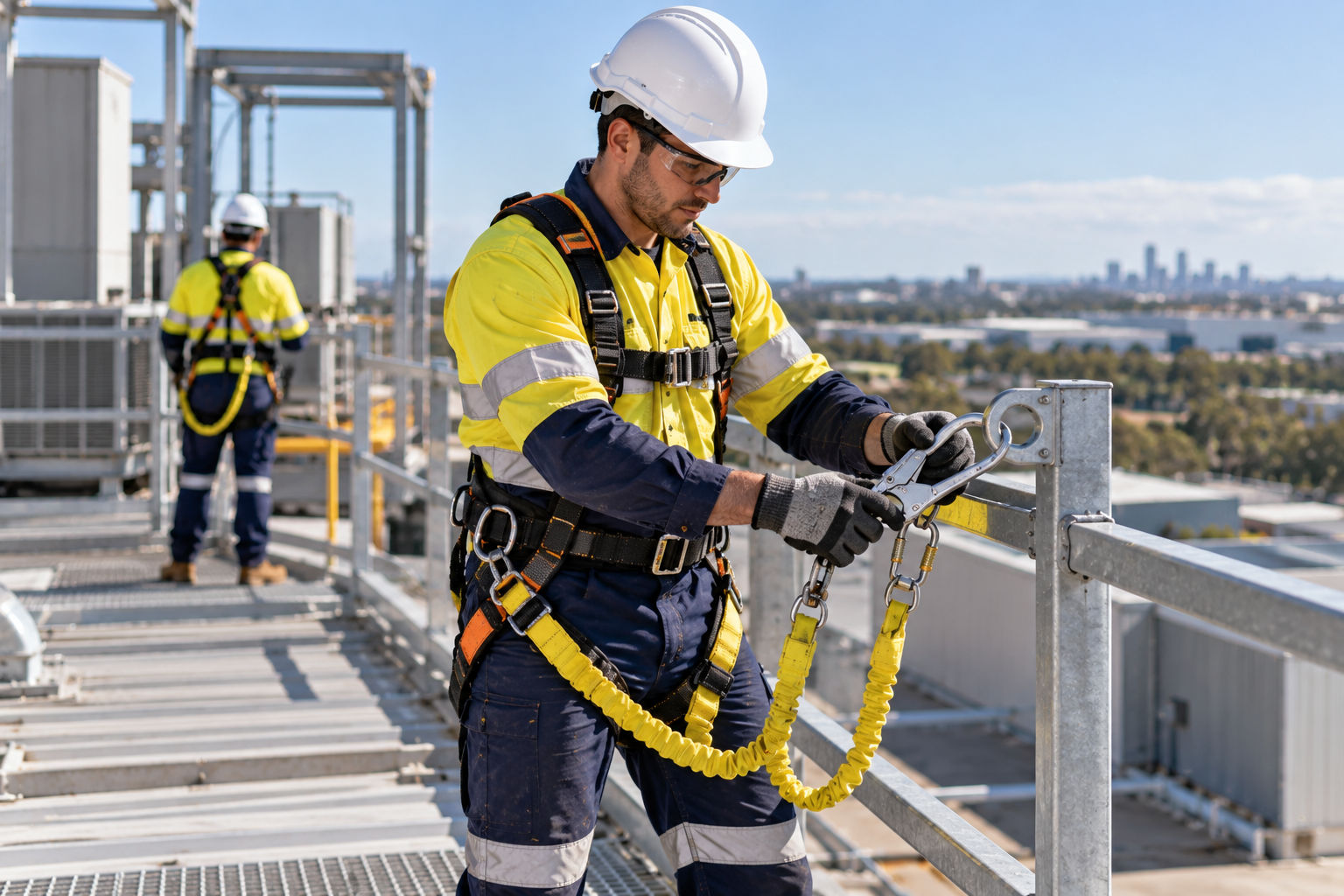
Working at height is one of the most serious risk areas in construction, maintenance, utilities, warehousing, mining, oil and gas, engineering and industrial operations. A fall can occur from a roof, scaffold, ladder, platform, mezzanine, structure, loading area, plant, tower or elevated work position. This is why work at height should be planned around preventing the fall wherever reasonably practicable rather than relying only on a safety harness after the risk has already been created.
Fall protection PPE still plays a critical role when higher-level controls cannot fully remove the risk. Safety harnesses, lanyards, energy absorbers, anchorage systems, self-retracting lifelines and compatible connectors can form part of a complete fall protection system. These items must be selected as a system. A harness by itself does not prevent a fall, and attaching a worker to an unsuitable anchor point can create a false sense of security.
This guide explains the practical differences between fall prevention, fall restraint and fall arrest, how to choose a full-body safety harness, what to consider when selecting lanyards and anchor points, how to inspect equipment, and how procurement teams can build a more consistent working-at-heights PPE program.
Start With Fall Prevention Before Fall Arrest
The strongest work-at-height strategy begins by asking whether the task can be completed without exposing a worker to an unprotected edge or fall risk. Depending on the work, this may involve completing the task at ground level, using prefabrication, relocating equipment, using permanent access systems or changing the work method.
If the height risk cannot be removed, fall prevention controls should be considered before personal fall arrest. Examples can include guardrails and edge protection, properly designed working platforms, scaffolding, suitable elevating work platforms, covers over openings, fixed access systems and barriers that keep workers away from exposed edges.
These controls reduce reliance on worker behaviour and individual PPE. A harness system becomes necessary where the remaining risk requires personal protection, but it should sit inside the broader work-at-height plan.
Fall Restraint vs Fall Arrest
Fall restraint and fall arrest are often discussed together, but they serve different purposes.
What Is Fall Restraint?
A fall restraint system is intended to stop the worker from reaching the position where a fall can occur. The worker may be connected to an anchor using a fixed-length or adjustable system that physically limits travel toward an unprotected edge.
For suitable tasks, restraint can be preferable to arrest because the system is designed to prevent the worker from going over the edge in the first place. Restraint still requires correct planning, an appropriate anchor, compatible connectors and enough understanding of the work area to set the permitted movement correctly.
What Is Fall Arrest?
A fall arrest system is designed to stop a fall after it has begun and limit the forces transmitted to the worker. A complete fall arrest arrangement can involve a full-body safety harness, an appropriate anchorage, a compatible connecting subsystem, an energy-absorbing lanyard or suitable self-retracting device, adequate clearance below the worker and a rescue plan.
Because a worker can still fall before the system stops them, fall clearance, swing fall, anchor position, lanyard length and rescue capability all need to be considered before work starts.
Choosing a Full-Body Safety Harness
A full-body harness distributes fall-arrest forces across stronger areas of the body and provides connection points designed for specific applications. It should fit securely without preventing the worker from moving safely.
Harness design varies. Depending on the intended work, features may include dorsal or sternal attachment points, work-positioning attachment points, quick-connect buckles, adjustable shoulder and leg straps, padding and equipment loops.
The number of attachment points does not automatically make one harness better than another. The correct harness is the one that matches the intended system and task.
How a Safety Harness Should Fit
Fit is critical. A poorly adjusted harness may shift during a fall, create pressure in the wrong areas or interfere with the worker's movement.
When fitting a harness, check that:
- the harness is the correct size for the worker;
- the straps are not twisted;
- leg straps are secure and evenly adjusted;
- the chest strap sits in the intended position;
- the main attachment point is positioned correctly;
- loose strap ends are controlled;
- the harness does not restrict normal movement;
- other PPE and tools do not compromise fit.
Workers should receive practical fitting instruction rather than being expected to work it out from the product packaging.
Understanding Safety Lanyards
A lanyard connects the harness to another part of the fall protection system. The appropriate lanyard depends on whether the system is designed for restraint, positioning or fall arrest.
Fixed-Length Lanyards
A fixed-length lanyard can be useful in restraint applications where the travel distance must be limited. The system should be configured so the worker cannot reach the fall edge.
Energy-Absorbing Lanyards
Energy-absorbing lanyards are used in suitable fall arrest systems to help reduce the forces generated when a fall is stopped. The energy absorber may deploy during a fall, which adds to the distance required below the worker.
Twin-Leg Lanyards
Twin-leg lanyards are commonly used where workers need to transfer between compatible anchor points while maintaining continuous connection. Correct transfer technique is essential, and workers should understand how each leg is intended to be used.
Self-Retracting Lifelines
A self-retracting lifeline, often called an SRL, pays out and retracts line as the worker moves. In an appropriate system it can reduce free-fall distance compared with some conventional lanyard arrangements.
However, SRLs vary. Selection may depend on approved orientation, anchor location, leading-edge suitability, worker weight range, line material, maximum working length, rescue considerations and inspection requirements.
Anchor Points Are Part of the System
A high-quality harness and lanyard cannot compensate for an unsuitable anchor point. The anchorage should be designed, installed or selected for the intended fall protection application.
Workers should never assume that any nearby handrail, pipe, cable tray, scaffold component or structural feature is automatically a suitable anchor.
Questions to address include:
- Is the anchor intended for fall protection?
- Is it suitable for the system being used?
- Is the position appropriate for the worker's movement?
- Could the worker experience a swing fall?
- Is there adequate clearance below?
- Can the connection be made safely?
Why Anchor Position Matters
Where practical, positioning the anchor higher can reduce free-fall distance and may reduce the possibility of the worker striking a lower level. Low anchor positions can increase fall distance and change the forces and clearance requirements of the system.
Anchor location also influences swing fall. If the worker moves a long distance sideways from the anchor and then falls, the worker may swing toward a structure, edge or lower surface.
Fall Clearance Must Be Calculated
Fall arrest requires enough clear distance below the worker for the system to stop the fall before the worker reaches the ground, a lower level or another obstruction.
Factors that may contribute to required clearance include:
- lanyard length;
- free-fall distance;
- energy absorber deployment;
- harness movement;
- worker height;
- a suitable safety margin;
- anchor position.
The exact calculation should follow the equipment manufacturer's instructions and the site's fall protection design. Guessing is unsafe, particularly on low roofs or intermediate platforms.
What Is a Swing Fall?
A swing fall can occur when a worker falls while positioned sideways from the anchor point. The worker drops and then swings toward the vertical line below the anchor.
This can lead to impact with steelwork, building facades, equipment, platform edges or other structures. Reducing excessive sideways travel from the anchor can help manage this risk.
Inspect a Safety Harness Before Every Use
Fall protection equipment should receive a pre-use inspection. The worker should know what acceptable condition looks like and what requires the item to be removed from service.
Inspect harness webbing for cuts, fraying, abrasion, burns, chemical damage, UV deterioration, broken fibres and unusual stiffness or discoloration.
Also inspect stitching, buckles, D-rings, connectors, adjusters, identification information, lanyards, energy absorbers, hooks and gates. If there is doubt about the condition of equipment, it should be isolated from use and assessed according to the site's procedure.
What Happens to Equipment After a Fall?
Fall arrest equipment involved in an actual fall should be removed from normal service and managed according to the manufacturer's instructions and workplace procedure.
Even if the equipment looks acceptable, components may have been subjected to significant loads. Energy absorbers may have deployed, webbing may have stretched and hardware may have been stressed.
Cleaning and Storage of Fall Protection PPE
Harnesses, lanyards and related PPE should be kept clean and stored in a way that protects them from deterioration.
Good storage practices include:
- keeping equipment dry;
- protecting it from direct sunlight when not in use;
- keeping it away from chemicals and sharp objects;
- preventing heavy objects from crushing webbing;
- keeping contaminated equipment separate;
- using dedicated bags, lockers or storage areas.
Cleaning should follow product instructions. Harsh solvents or inappropriate chemicals can damage synthetic fibres even when the damage is not immediately visible.
Working at Heights With Other PPE
A fall protection system is rarely the only PPE being worn. Workers may also require helmets, safety eyewear, gloves, safety footwear, hi-vis workwear, FR garments or respiratory protection.
The combined PPE system should be assessed for compatibility. A harness should fit correctly over the worker's clothing. Bulky jackets should not prevent correct strap adjustment, and tool belts should not interfere with harness attachment points.
Workwear for Working at Heights
Workwear for height-related tasks should allow movement without creating avoidable snag hazards. Depending on the site and hazard, workers may need hi-vis, FR, anti-static or weather-protective garments.
Useful features can include good range of movement, secure pockets, durable knee and elbow areas, closures that remain secure, comfortable layering beneath a harness and appropriate workplace visibility.
A Rescue Plan Is Part of Fall Arrest Planning
If a worker falls and is suspended in a harness, the work is not finished when the fall has been stopped. The worker must be rescued promptly and safely.
The rescue plan should address:
- how the worker will be reached;
- who is trained to perform the rescue;
- what rescue equipment is required;
- how emergency communication will work;
- whether external emergency services can access the location;
- how rescuers will avoid exposure to another fall.
Calling emergency services may form part of the plan, but it should not be the only plan where site conditions require a faster or specialised response.
Training Workers for Fall Protection
Workers should understand the equipment they are expected to use, not merely receive it from stores.
Training should cover the difference between restraint and arrest, harness fitting, pre-use inspections, safe connection, approved anchors, movement between anchors, fall clearance, swing-fall awareness, equipment limitations and the site rescue procedure.
Supervisors should also be able to identify obvious misuse, poor fit and unsuitable connection practices.
Working at Heights in Construction and Maintenance
Construction work can involve changing structures and temporary access. Industrial maintenance teams may face non-routine height tasks around plant, conveyors, roofs, tanks, pipe racks and machinery.
Planning should happen before workers reach the elevated area. Edge protection, access, anchor systems, material handling and rescue all need to be considered together. For recurring maintenance locations, defining approved access methods and anchor arrangements in advance can reduce improvisation.
Mining, Oil and Gas and Utilities
These sectors may combine work at height with other hazards such as electrical energy, heat, flame, chemicals, confined spaces or remote locations.
PPE selection should address the full hazard profile. A fall harness should integrate with the worker's FR clothing, helmet, gloves and other task-specific equipment without creating unsafe compromises.
Working at Heights in Australia
Australian workplaces should manage fall risk through the applicable work health and safety framework, relevant codes of practice, site procedures and equipment requirements. Duty holders should prioritise eliminating or preventing falls and ensure that personal fall protection systems are properly designed, used, inspected and supported by rescue arrangements.
Because requirements can vary by jurisdiction and work type, employers should confirm the rules applying to the specific state, territory and task.
Working at Heights in India
Industrial and construction workplaces in India should also treat work at height as a planned safety activity rather than relying only on individual PPE. Safe access, suitable platforms, edge protection, training, correctly selected harness systems and supervision should form part of the job planning process.
Site procedures should align with applicable Indian legal requirements, client specifications and recognised safe work practices for the industry.
Fall Protection Procurement Checklist
Before purchasing fall protection PPE, procurement and safety teams should confirm:
- the exact work-at-height task;
- whether the system is for restraint, positioning or arrest;
- the intended anchor arrangement;
- required harness attachment points;
- worker size range;
- lanyard or SRL requirements;
- connector compatibility;
- clearance available below the worker;
- other PPE worn at the same time;
- inspection and servicing requirements;
- replacement component availability;
- rescue and training requirements.
This prevents the common mistake of purchasing a harness first and trying to design the fall protection system around it later.
Common Working-at-Heights PPE Mistakes
Assuming Any Harness Is Suitable
Harness configurations vary. Attachment points and design should match the intended system and task.
Using an Unverified Anchor
Nearby structures are not automatically suitable fall protection anchors.
Ignoring Fall Clearance
A fall arrest system can still fail to prevent injury if there is not enough space for it to stop the worker before impact.
Ignoring Swing Fall
Moving too far sideways from the anchor can create dangerous pendulum movement during a fall.
Poor Harness Adjustment
Loose, twisted or incorrectly positioned straps can reduce system effectiveness and increase injury risk.
No Rescue Plan
Stopping the fall is only one part of the emergency. The suspended worker must be recovered safely.
How Triotex and PPE CART Support Work-at-Height Programs
Triotex supports industrial businesses with workwear and protective clothing for demanding environments, including hi-vis, FR and customised industrial garment programs. For workers wearing fall protection, suitable workwear should provide the required workplace protection while allowing correct harness fit and movement.
PPE CART supports workplace buyers across a wider range of industrial PPE categories. A work-at-height program may involve safety helmets, gloves, footwear, harnesses, lanyards, connectors and other safety equipment alongside the worker's clothing.
For safety and procurement teams, the objective should be a compatible system rather than a collection of unrelated products. Standardising approved combinations can simplify training, inspection, replacement and stock control across multiple workers and sites.
Frequently Asked Questions
What is the difference between fall restraint and fall arrest?
Fall restraint is intended to prevent a worker from reaching the fall hazard. Fall arrest is designed to stop the worker after a fall has begun.
Is a safety harness enough for working at height?
No. A harness is only one component. A complete system may also require an appropriate anchorage, lanyard or self-retracting device, connectors, adequate clearance, inspection, training and a rescue plan.
Should a harness be inspected before each use?
Yes. Workers should check the harness and associated equipment before use for cuts, abrasion, damage, contamination, defective hardware and other conditions that may affect safety.
Can a handrail be used as an anchor point?
Do not assume that a handrail or nearby structure is a suitable fall-protection anchor. Anchorages should be specifically suitable for the intended system and application.
What happens to a harness after it arrests a fall?
Equipment involved in a fall should be removed from normal service and handled according to the manufacturer's instructions and workplace procedure before any possible reuse.
Why is a rescue plan necessary?
A worker suspended after a fall needs to be recovered safely. Rescue arrangements should be planned before work begins so the response does not depend on improvisation during an emergency.
Conclusion
Working at height should be managed by preventing exposure to a fall wherever reasonably practicable. Guardrails, suitable platforms, access systems and other fall-prevention controls can often provide stronger protection than relying only on personal fall arrest.
Where safety harnesses and other fall protection PPE are required, the system must be planned as a whole. Harness fit, anchor position, lanyard type, fall clearance, connectors, inspection, compatibility and rescue arrangements all influence the real level of protection.
For construction, maintenance, manufacturing, mining, utilities, oil and gas and other industrial workplaces, effective fall protection is not simply a matter of issuing a harness. It is a combination of risk control, equipment selection, training, supervision and emergency planning.
Safety and procurement teams that standardise approved working-at-heights systems can improve consistency while making inspection, replacement and training easier to manage. Triotex and PPE CART can support the broader PPE and workwear requirements that help these programs operate effectively in real industrial conditions.
About the author
Pujan Thakkar is building Triotex and PPE CART with a focus on industrial workwear, PPE, product strategy, manufacturing, growth, and partnerships. He writes about FR workwear, hi-vis standards, white label manufacturing, and practical supply programs for industrial buyers.