Industrial Safety Footwear Guide: Slip Resistance, Toe Protection and Choosing the Right Work Boots
By Pujan Thakkar
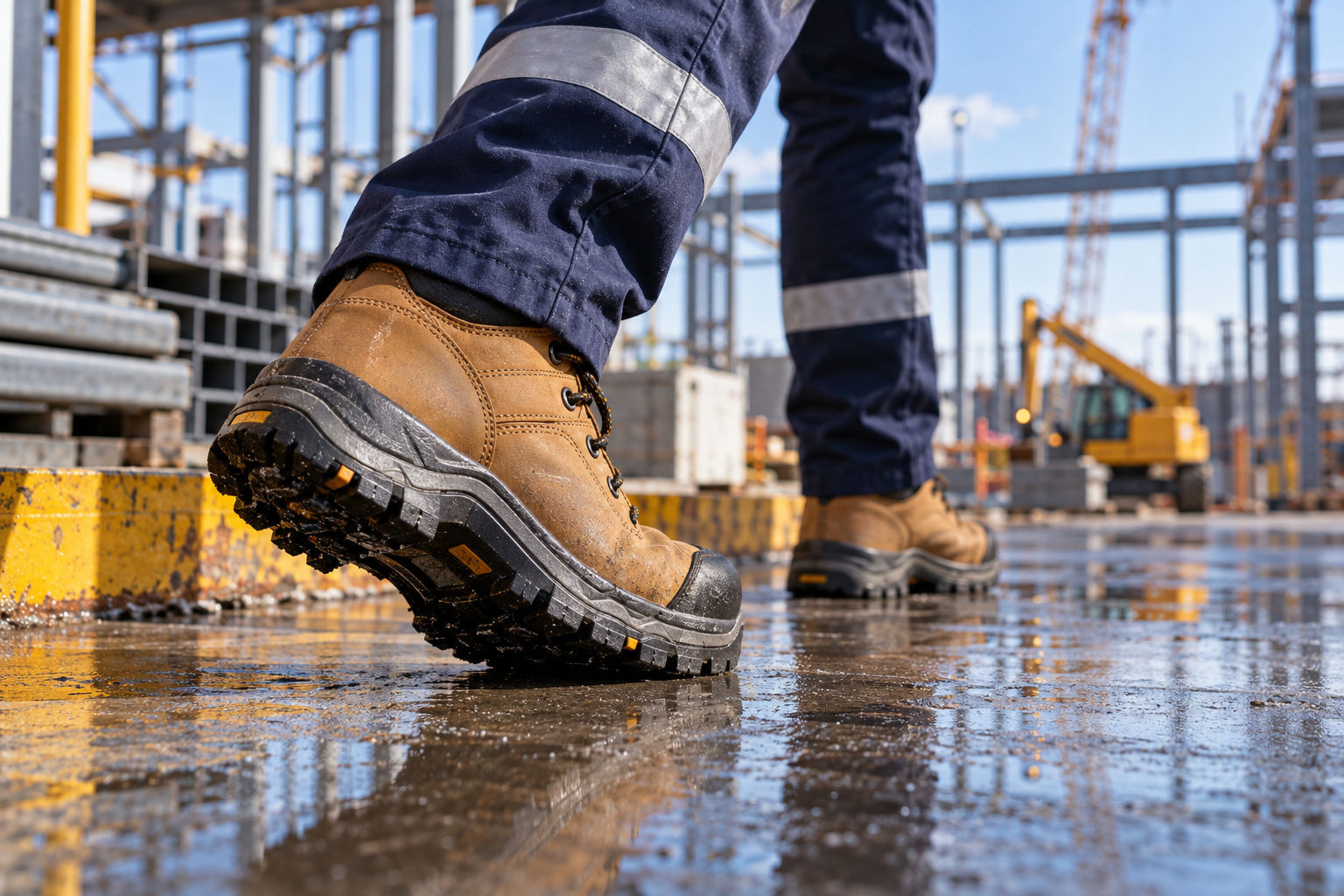
Safety footwear is one of the most frequently used forms of personal protective equipment in industrial workplaces, yet choosing the right pair of work boots is often treated as a simple purchasing decision.
In reality, safety footwear can perform several different protective functions. Depending on the workplace, workers may need protection from falling objects, slippery floors, sharp materials, water, uneven surfaces, heat, chemicals or long periods of standing and walking.
A heavy steel toe boot may be appropriate for one environment but unnecessarily bulky for another. A lightweight safety shoe may offer excellent comfort for warehouse work but may not provide the protection required for a construction site. Similarly, a boot that performs well on dry concrete may behave differently on wet, oily or contaminated floors.
This guide explains how to approach safety footwear selection systematically, with particular attention to slip resistance, toe protection, sole construction, comfort, fit and the demands of different industrial workplaces.
Why Safety Footwear Selection Matters
Feet are exposed to hazards in almost every industrial environment.
Common workplace foot hazards include:
- Heavy objects falling onto the foot
- Pallets or equipment striking the toes
- Sharp objects penetrating the sole
- Slippery floors
- Wet or muddy surfaces
- Uneven ground
- Hot surfaces
- Chemical contamination
- Long periods of walking or standing
- Manual handling activities
The correct footwear depends on which of these hazards are actually present.
This is why safety boots should be selected through workplace risk assessment rather than simply choosing the most rugged-looking product available.
Start With the Workplace Hazard
Before comparing brands, materials or styles, businesses should identify what workers need protection from.
Useful questions include:
- Can heavy goods fall onto the feet?
- Are floors regularly wet?
- Are oils or other contaminants present?
- Can workers step on sharp materials?
- Do workers operate on uneven outdoor terrain?
- Is the job mainly indoors on smooth floors?
- Are workers walking continuously throughout the shift?
- Does the footwear need to resist water?
- Will workers be exposed to heat or sparks?
- Are workers climbing ladders or structures?
Once these questions are answered, the required safety footwear features become much clearer.
Toe Protection: Steel Toe, Composite Toe and Other Options
Toe protection is one of the features most commonly associated with safety boots.
The protective toe area is designed to reduce the risk of injury from impact or compression.
Protective toe caps can be manufactured from different materials.
Steel Toe Protection
Steel toe work boots remain widely used across construction, manufacturing, logistics and heavy industry.
Steel is strong, durable and familiar to most industrial users. It is often selected where workers may be exposed to substantial impact hazards.
However, steel toe construction may add weight compared with some alternative materials.
Composite Toe Protection
Composite toe caps can be made from non-metallic materials and are increasingly common in modern safety footwear.
Depending on the design, composite toe footwear may help reduce overall weight while maintaining the required level of protection for the intended application.
Non-metallic construction can also be useful in particular workplaces where metal content is undesirable.
Toe Protection Must Match the Risk
Businesses should avoid assuming that every employee requires exactly the same type of safety boot.
A warehouse picker, construction worker, maintenance technician and office-based site supervisor may face very different hazards even if they work for the same organisation.
The required protection should always be determined first, with footwear selected afterwards.
Slip Resistance Is Critical
Slip prevention is one of the most important considerations when selecting industrial safety footwear.
Slips can occur when there is insufficient friction between the footwear sole and the walking surface.
Common contributing factors include:
- Water
- Oil
- Grease
- Mud
- Dust
- Polished surfaces
- Loose materials
- Worn sole patterns
Slip resistant work boots can help reduce risk, but footwear should never be treated as the only control.
Good housekeeping, drainage, floor maintenance, spill response and suitable surface design remain important.
Understand the Working Surface
A sole that performs effectively on one surface may not perform identically on another.
When purchasing safety footwear, consider whether workers operate on:
- Smooth concrete
- Wet concrete
- Steel flooring
- Tiles
- Painted surfaces
- Outdoor soil
- Gravel
- Mud
- Warehouse floors
- Construction slabs
The workplace should also consider contaminants that may be present.
A warehouse dealing with packaged consumer products may have very different footwear requirements from a food-processing facility, fabrication workshop or construction site.
Sole Pattern and Tread Design
Tread design plays an important role in how footwear interacts with the ground.
Deep tread patterns can provide useful traction on loose or uneven outdoor surfaces, while other designs may be better suited to smooth indoor environments.
Channels in the sole can also help move water or contaminants away from the contact area.
However, aggressive tread may collect mud, stones or debris more easily.
There is no single sole design that is ideal for every industry.
Penetration Resistance
Workers in construction, demolition, maintenance and certain manufacturing environments may be exposed to nails, metal offcuts, sharp debris or other objects capable of penetrating the sole.
Where this risk exists, penetration-resistant footwear may be required.
This protection is generally incorporated into the structure of the sole using suitable protective materials.
The need for penetration resistance should be based on the actual work environment rather than automatically specified for every employee.
Waterproof and Water-Resistant Work Boots
Wet feet can reduce comfort considerably during long shifts.
Workers exposed to rain, wet ground, washdown operations or outdoor conditions may benefit from waterproof or water-resistant work boots.
However, waterproofing can involve trade-offs.
Highly water-resistant footwear may allow less moisture vapour to escape, which can increase internal heat and perspiration in hot environments.
Businesses should therefore balance:
- External water exposure
- Climate
- Worker activity level
- Breathability
- Required protection
The best waterproof work boots for one job may not be ideal for another.
Lightweight Safety Boots and Safety Shoes
Search demand for lightweight safety shoes and lightweight work boots reflects a major shift in industrial footwear expectations.
Workers increasingly expect safety footwear to provide protection without feeling unnecessarily heavy.
This is particularly relevant in jobs where workers walk long distances throughout a shift.
Examples include:
- Warehouse picking
- Logistics
- Transport operations
- Maintenance
- Site supervision
- Technical trades
Reducing footwear weight can improve comfort, but protective requirements should never be compromised solely to achieve a lighter product.
Boots Versus Safety Shoes
Safety footwear is available in many different forms, including ankle boots, higher-cut boots and low-cut safety shoes.
Safety Boots
Safety boots can provide greater coverage around the ankle and are widely used in construction, mining, utilities, industrial maintenance and outdoor work.
Higher-cut designs may also help protect against dirt, debris and minor contact around the ankle area.
Safety Shoes
Low-cut safety shoes can be suitable for indoor industrial environments, warehouses, logistics operations and workplaces where workers require mobility with less bulk.
Some modern safety shoes resemble athletic footwear while incorporating protective toe caps and industrial sole systems.
The choice should be based on the work environment rather than appearance alone.
Comfort Matters More Than Many Buyers Realise
Protective footwear is often worn for eight hours or more each day.
A technically protective boot that is uncomfortable may create problems of its own.
Workers may loosen laces, avoid wearing the footwear correctly or replace approved footwear with something more comfortable.
Comfort therefore supports compliance.
Important Comfort Features
When comparing safety boots, consider:
- Overall weight
- Footbed cushioning
- Arch support
- Heel support
- Flexibility
- Breathability
- Internal seams
- Ankle padding
- Toe room
- Width options
The most comfortable work boots are not necessarily the softest boots. Support, fit and stability are equally important.
Correct Fit Is Essential
Safety footwear should fit the individual worker correctly.
Foot shape varies significantly between people, so issuing one standard width or expecting every employee to use the same footwear model can cause problems.
Poor fit may contribute to:
- Blisters
- Heel movement
- Toe pressure
- Foot fatigue
- Reduced stability
- Workers avoiding approved footwear
Workers should have sufficient room around the toes without excessive movement inside the boot.
Women's Safety Footwear Should Be Properly Fitted
Safety boots women search demand continues to grow as workplaces expand their PPE options beyond traditional unisex designs.
Simply issuing smaller versions of men's boots may not provide an ideal fit for every worker.
Organisations should consider footwear ranges that provide suitable shapes, widths and sizing options for the actual workforce.
Improving fit can improve comfort, stability and PPE compliance.
Consider the Entire Working Day
Footwear should be selected based on how workers actually use it.
A worker who spends most of the day seated in a forklift has different requirements from someone who walks 15 kilometres through a warehouse.
Likewise, a maintenance employee may spend part of the day walking, part climbing ladders and part kneeling around machinery.
Footwear selection should consider the complete job rather than a single task.
Construction Safety Footwear
Construction environments can expose workers to multiple footwear hazards at once.
Potential requirements may include:
- Toe protection
- Penetration resistance
- Grip on uneven surfaces
- Durable uppers
- Ankle coverage
- Water resistance
Construction footwear should also be inspected regularly because rough surfaces, concrete, mud and debris can accelerate wear.
Warehouse and Logistics Safety Footwear
Warehouse workers may spend most of their shift walking on relatively smooth concrete.
Important features may therefore include:
- Slip resistance
- Light weight
- Cushioning
- Toe protection where required
- Breathability
- Flexible sole construction
Where forklifts, pallets and material-handling equipment are present, toe protection may be particularly important.
Manufacturing Safety Footwear
Manufacturing environments vary widely.
A garment factory, engineering workshop, food facility and metal fabrication plant may all require different safety footwear.
Risk assessment should consider:
- Machinery
- Dropped objects
- Hot materials
- Sharp metal
- Oil and grease
- Chemical exposure
- Floor condition
Safety footwear specifications should match the actual process.
Mining, Utilities and Heavy Industry
Heavy industrial environments often require footwear designed for demanding outdoor conditions.
Workers may encounter:
- Uneven terrain
- Mud
- Water
- Heavy equipment
- Sharp debris
- Long walking distances
Durability becomes especially important when footwear is exposed to harsh conditions every day.
Heat and Hot Work Environments
Workers around welding, foundries, fabrication or hot surfaces may require footwear specifically suited to the environment.
Ordinary safety boots should not automatically be assumed suitable for every hot-work application.
The workplace should review heat exposure, sparks, molten materials and other relevant hazards when defining footwear requirements.
Chemical Environments
Where workers may be exposed to chemicals, footwear materials must be compatible with the substances present.
Different outsole and upper materials can respond differently to oils, solvents, acids and other chemicals.
The chemical hazard should therefore be identified first and suitable protective footwear selected accordingly.
Safety Footwear Is Only One Part of Slip Prevention
Slip resistant work boots can help, but they should not become an excuse for poor floor management.
A complete slip-prevention program may include:
- Immediate spill cleanup
- Suitable drainage
- Floor maintenance
- Good housekeeping
- Appropriate warning systems
- Suitable work procedures
- Correct footwear
The strongest approach combines workplace controls with appropriate PPE.
Inspect Safety Boots Regularly
Safety footwear does not last forever.
Workers and supervisors should regularly inspect boots for damage or excessive wear.
Check for:
- Worn tread
- Cracked soles
- Sole separation
- Damaged uppers
- Exposed toe caps
- Broken eyelets
- Damaged laces
- Water entering previously waterproof footwear
- Internal damage affecting comfort
Worn soles can reduce grip even when the footwear originally provided strong slip-resistant performance.
When Should Safety Footwear Be Replaced?
There is no universal replacement interval because wear depends on the workplace, worker and footwear design.
A worker walking continuously on abrasive concrete may wear out footwear much faster than someone working in a clean indoor technical environment.
Replacement should be based on condition and protective performance rather than waiting for the footwear to fail completely.
Clean and Maintain Work Boots Correctly
Regular cleaning can improve footwear life and make damage easier to identify.
Workers should remove mud, dirt, oils and other contaminants according to the manufacturer's care instructions.
Wet boots should be dried appropriately rather than subjected to excessive heat that could damage materials or adhesives.
Footwear heavily contaminated with hazardous substances may require specific decontamination or replacement procedures.
Do Not Ignore the Sole
Buyers often focus on the upper material and toe cap while overlooking the outsole.
Yet the sole is the part of the footwear that interacts directly with the working surface throughout the shift.
When assessing work boots, consider:
- Slip performance
- Tread depth
- Flexibility
- Abrasion resistance
- Resistance to workplace contaminants
- Stability
- Weight
Choosing Safety Boots for a Workforce
Large organisations should avoid selecting footwear based only on purchase price.
A better procurement process considers:
- Hazard protection
- Worker comfort
- Expected service life
- Fit options
- Replacement frequency
- Workplace conditions
- Applicable standards and requirements
A slightly more expensive product may represent better value if it lasts longer, improves comfort or reduces the likelihood that workers avoid wearing approved PPE.
Trial Footwear Before Large-Scale Rollout
For larger teams, trialling selected footwear models can be useful.
A small group of workers can test the footwear during normal duties and provide feedback on:
- Comfort
- Grip
- Fit
- Weight
- Heat build-up
- Durability
- Ease of use
Feedback should be considered alongside technical requirements rather than replacing them.
A Practical Safety Footwear Buying Checklist
Before purchasing industrial safety footwear, ask the following questions.
Hazard Protection
- Is toe protection required?
- Is penetration resistance required?
- Are workers exposed to chemicals?
- Is water resistance required?
- Are hot surfaces or sparks present?
Slip Risk
- Are floors wet?
- Are oils or grease present?
- Is the surface smooth or uneven?
- Does the sole design suit the environment?
Comfort and Fit
- Will workers walk long distances?
- Is the footwear unnecessarily heavy?
- Are multiple widths available?
- Is there sufficient toe space?
- Does the footwear provide appropriate support?
Work Environment
- Is the work indoors or outdoors?
- Is the environment hot?
- Is the ground uneven?
- Will workers climb ladders or structures?
Durability
- Is the outsole suitable for abrasive surfaces?
- Can the upper withstand the work environment?
- Can the footwear be cleaned easily?
- How will damaged footwear be replaced?
Common Safety Footwear Purchasing Mistakes
Several mistakes appear repeatedly in workplace footwear programs.
Choosing One Boot for Everyone
Different roles may have different risks. One footwear specification may not suit every employee.
Buying Only on Price
Initial purchase price does not reflect comfort, durability or replacement frequency.
Ignoring Worker Fit
Poorly fitting footwear can reduce comfort and PPE compliance.
Assuming Every Safety Boot Is Slip Resistant Everywhere
Grip depends on the sole, walking surface and contaminants present.
Replacing Footwear Too Late
A heavily worn tread or damaged sole can reduce protective performance.
Safety Footwear and the Wider PPE System
Foot protection should be considered alongside the worker's complete PPE and workwear requirements.
A worker may simultaneously require:
- High-visibility workwear
- Protective gloves
- Eye protection
- Head protection
- Hearing protection
- Respiratory protection
- Protective footwear
PPE should function as a coordinated system rather than a collection of unrelated products.
Choosing Foot Protection With Triotex and PPE CART
Triotex develops industrial workwear and protective clothing for demanding workplace environments, while PPE CART supports businesses sourcing PPE and workplace safety products across multiple protection categories.
When purchasing safety footwear, businesses should begin with the actual hazard and then define the required toe protection, sole performance, fit, comfort, durability and environmental resistance.
The result should be footwear that workers can wear throughout the shift while still providing the protection required for the job.
Conclusion
Choosing the right safety boots involves much more than deciding between a steel toe boot and a safety shoe.
Effective safety footwear selection starts with workplace risk assessment. Businesses should consider impact hazards, slip risks, sharp objects, water, chemicals, heat, terrain and the amount of walking workers perform.
Toe protection should match the hazard. Slip-resistant soles should suit the actual working surface. Waterproofing, sole construction, penetration resistance and ankle coverage should be selected according to the environment rather than added automatically.
Comfort is equally important because protective footwear may be worn for most of the working day. Weight, fit, cushioning, flexibility and breathability can all influence whether employees wear their safety footwear correctly and consistently.
Finally, safety boots need ongoing inspection and replacement. Worn tread, damaged soles and deteriorated uppers can reduce the performance of footwear that was originally suitable.
For construction, warehousing, manufacturing, logistics, mining, utilities and other industrial workplaces, the strongest safety footwear program combines appropriate product selection with good housekeeping, hazard controls, regular inspection and worker feedback.
About the author
Pujan Thakkar is building Triotex and PPE CART with a focus on industrial workwear, PPE, product strategy, manufacturing, growth, and partnerships. He writes about FR workwear, hi-vis standards, white label manufacturing, and practical supply programs for industrial buyers.